
Warehousing & Storage
Our warehouse is the backbone of Olympia’s logistics network. We use it to stage, store, and manage shipments for all lines of business. Every item that passes through our doors must be received, tagged, and protected and tracked with precision. Proper warehouse management minimizes loss, improves scheduling efficiency, and keeps projects moving smoothly from pickup to final delivery.
Residential Storage
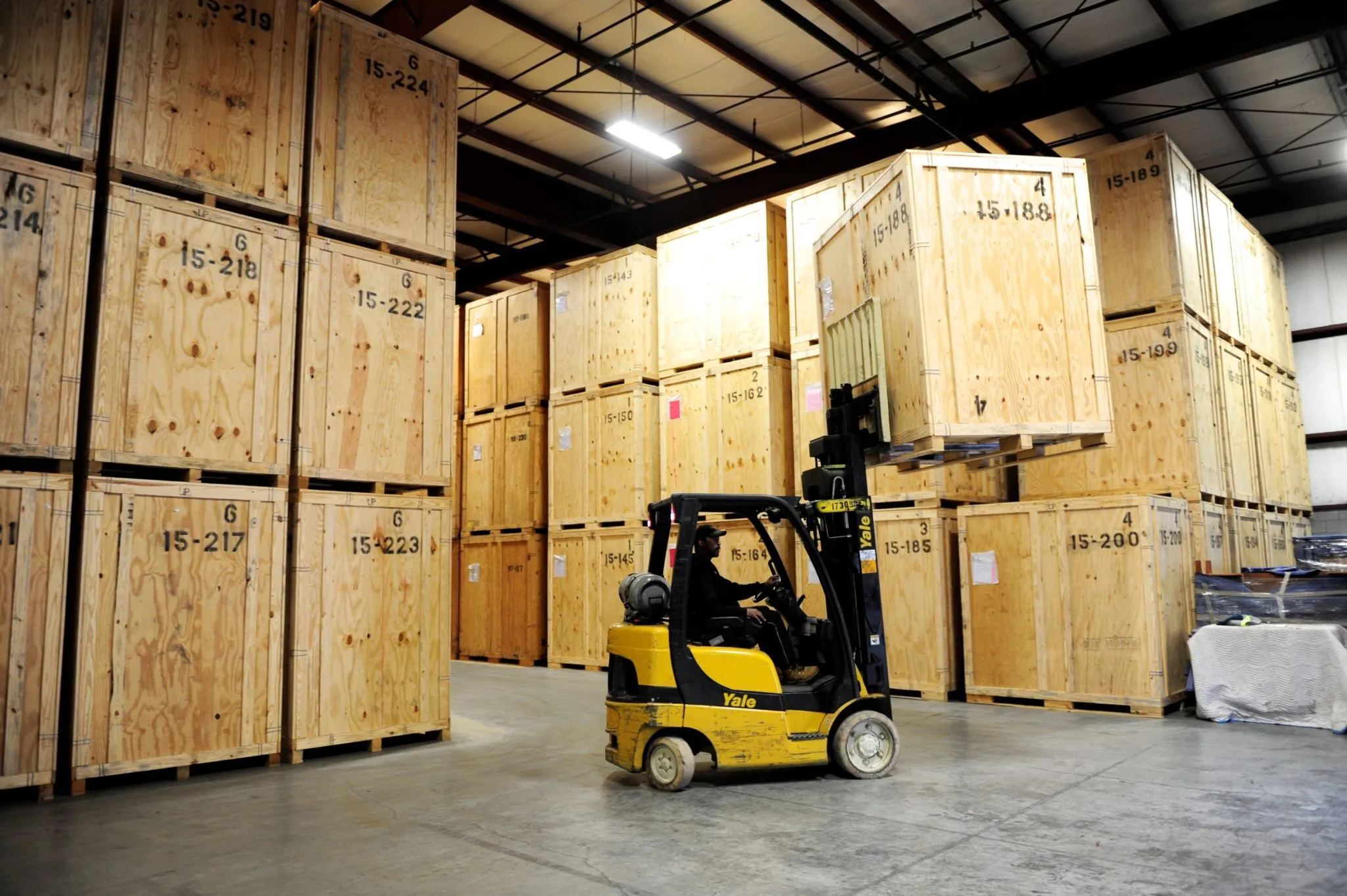
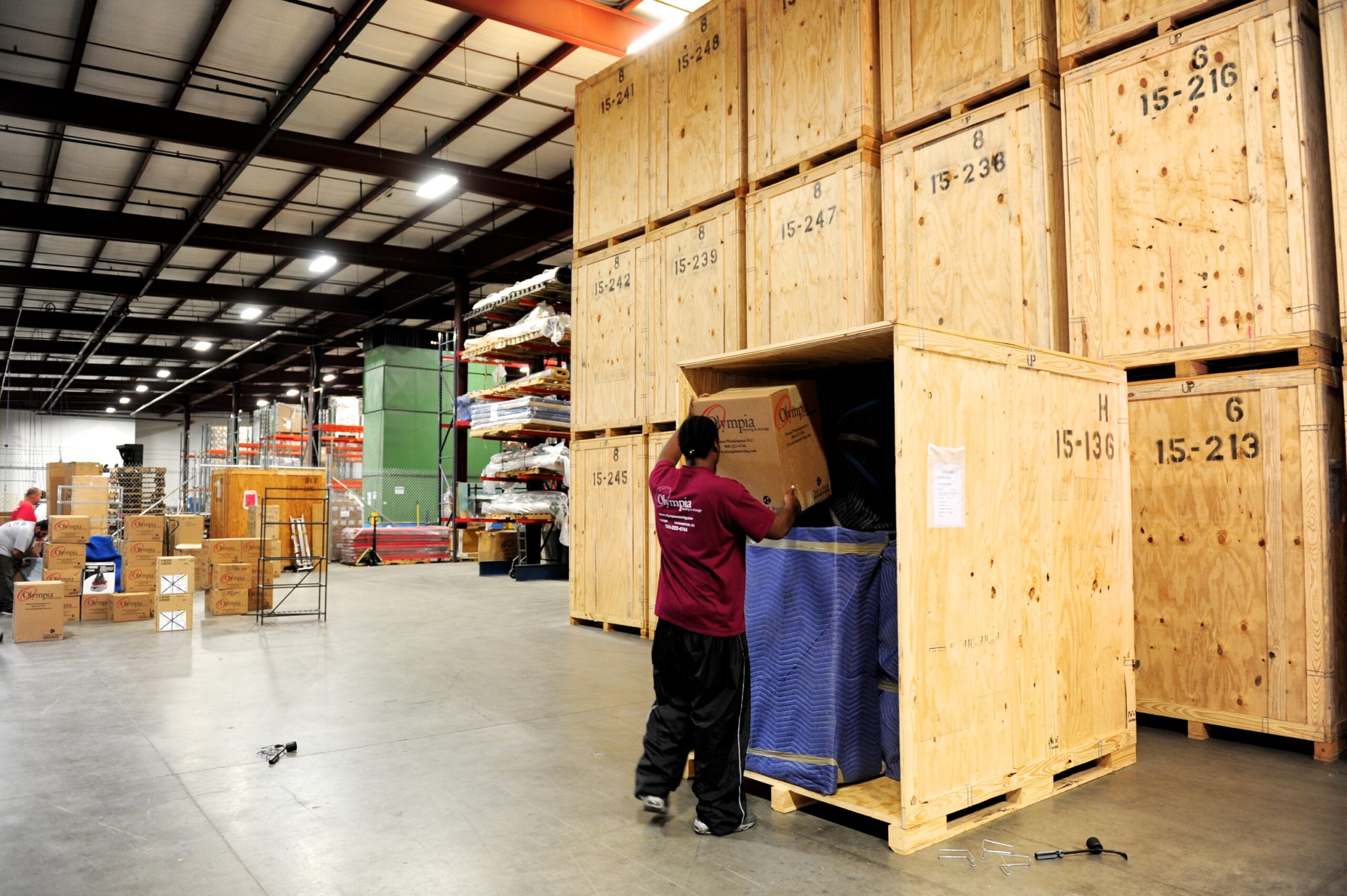
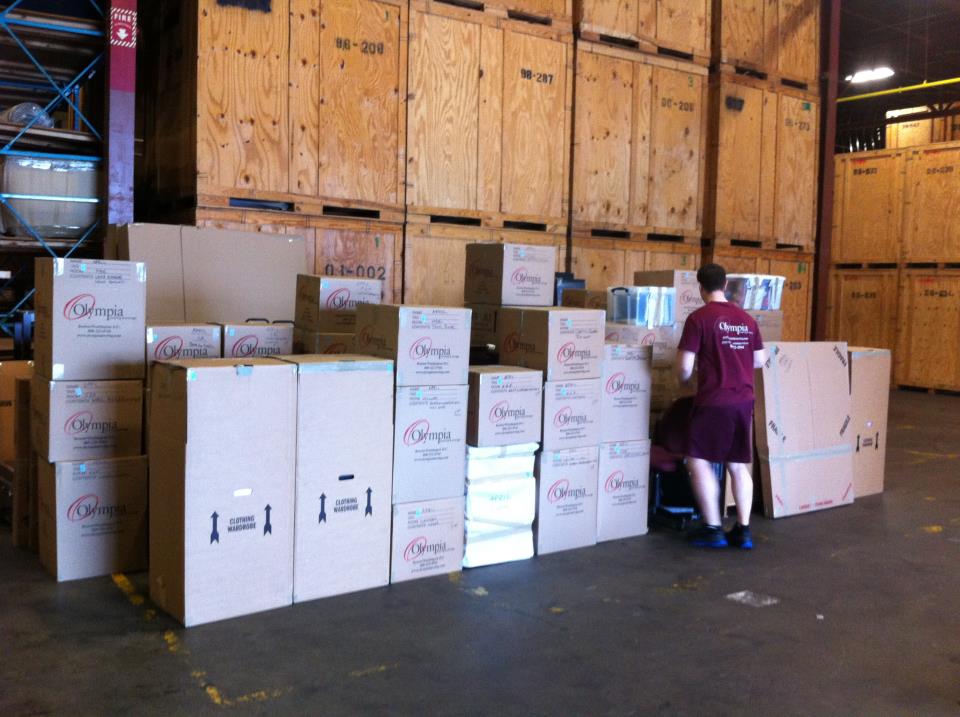
Typically supports household goods moves, short-term storage-in-transit (SIT), or long-term storage for clients between homes. These shipments are generally vaulted, inventoried, wrapped, and stored in sealed wooden crates. Each vault represents an individual client’s shipment, ensuring separation and traceability. Residential storage emphasizes protection and accountability: accurate inventories, proper labeling, and clean, climate-controlled environments maintain client confidence and reduce claims.
Commercial Storage
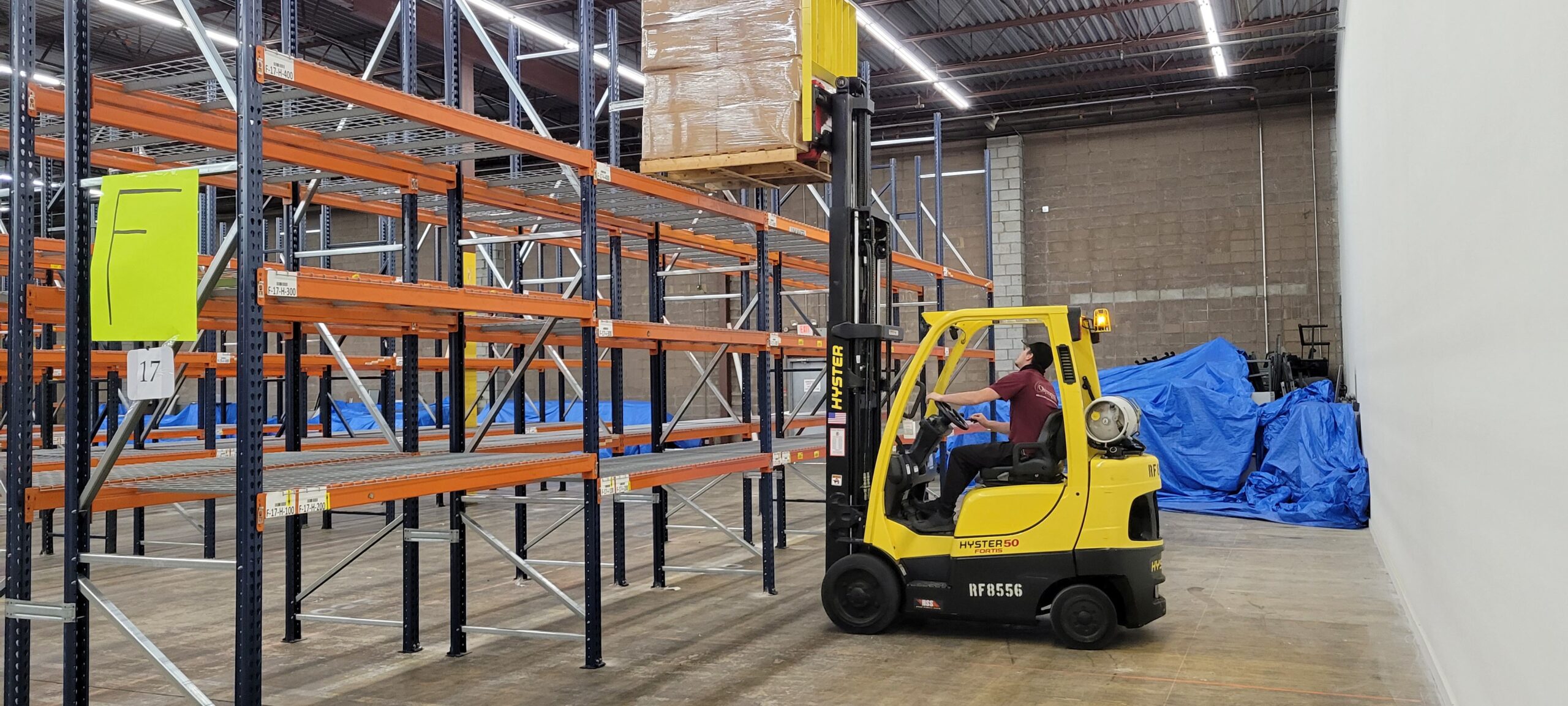
Typically focuses on accessibility and turnover. It supports ongoing business projects, such as phased office moves, furniture installation, and FF&E (furniture, fixtures, and equipment) management. Items are often racked or palletized rather than vaulted, allowing for frequent access, partial pulls, and re-delivery. Efficiency and organization are ley: commercial clients expect quick retrieval, clear reporting, and inventory systems capable of tracking hundreds or thousands of assets at once.
Types of Storage
-

Racked
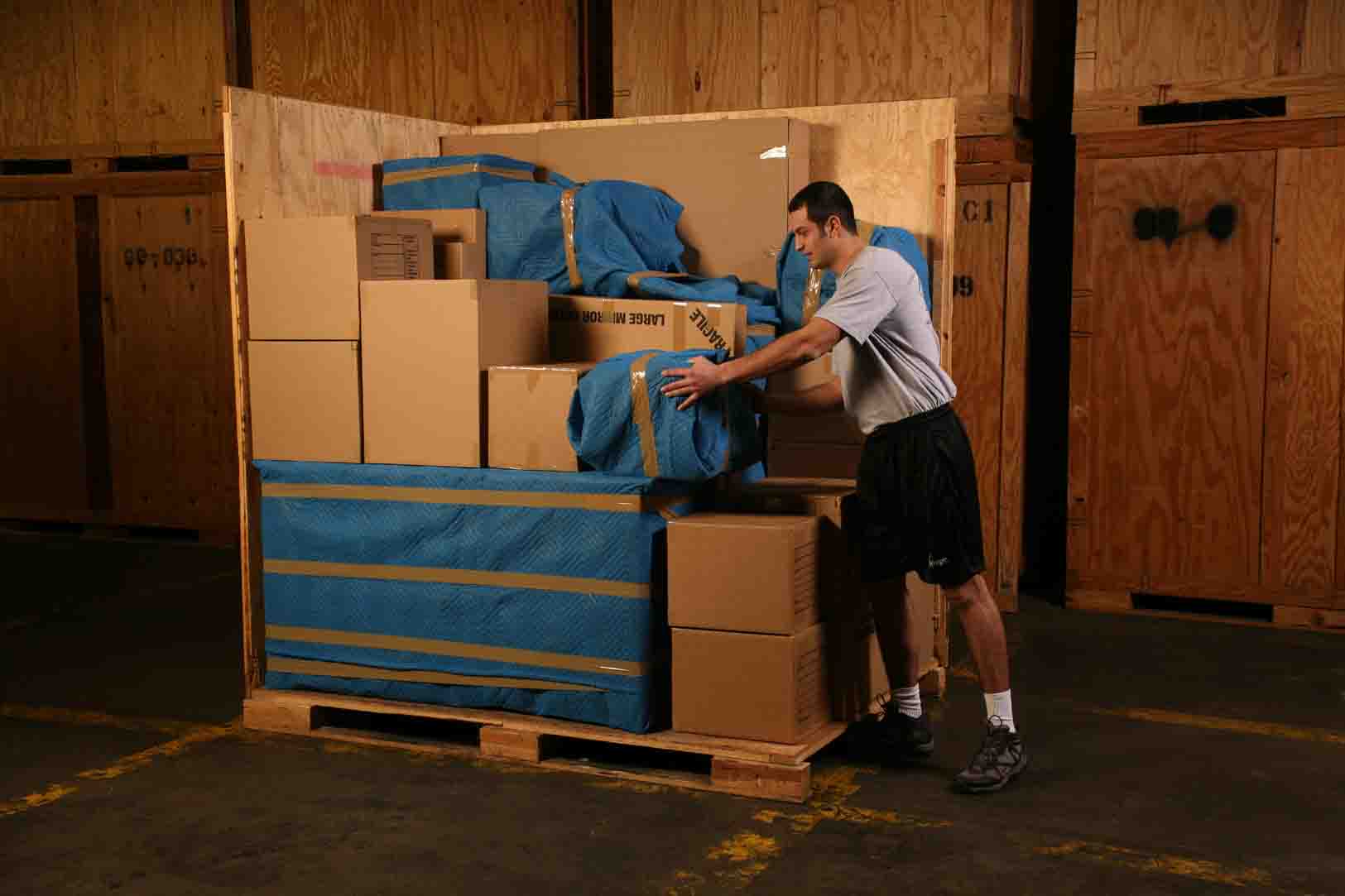
Used for items that require regular access or organization by project, such as office furniture, FF&E, or commercial goods. Product is stored on pallet racking for efficient space use and easy retrieval. Ideal for ongoing projects or inventory that moves in and out frequently. -
Oversize
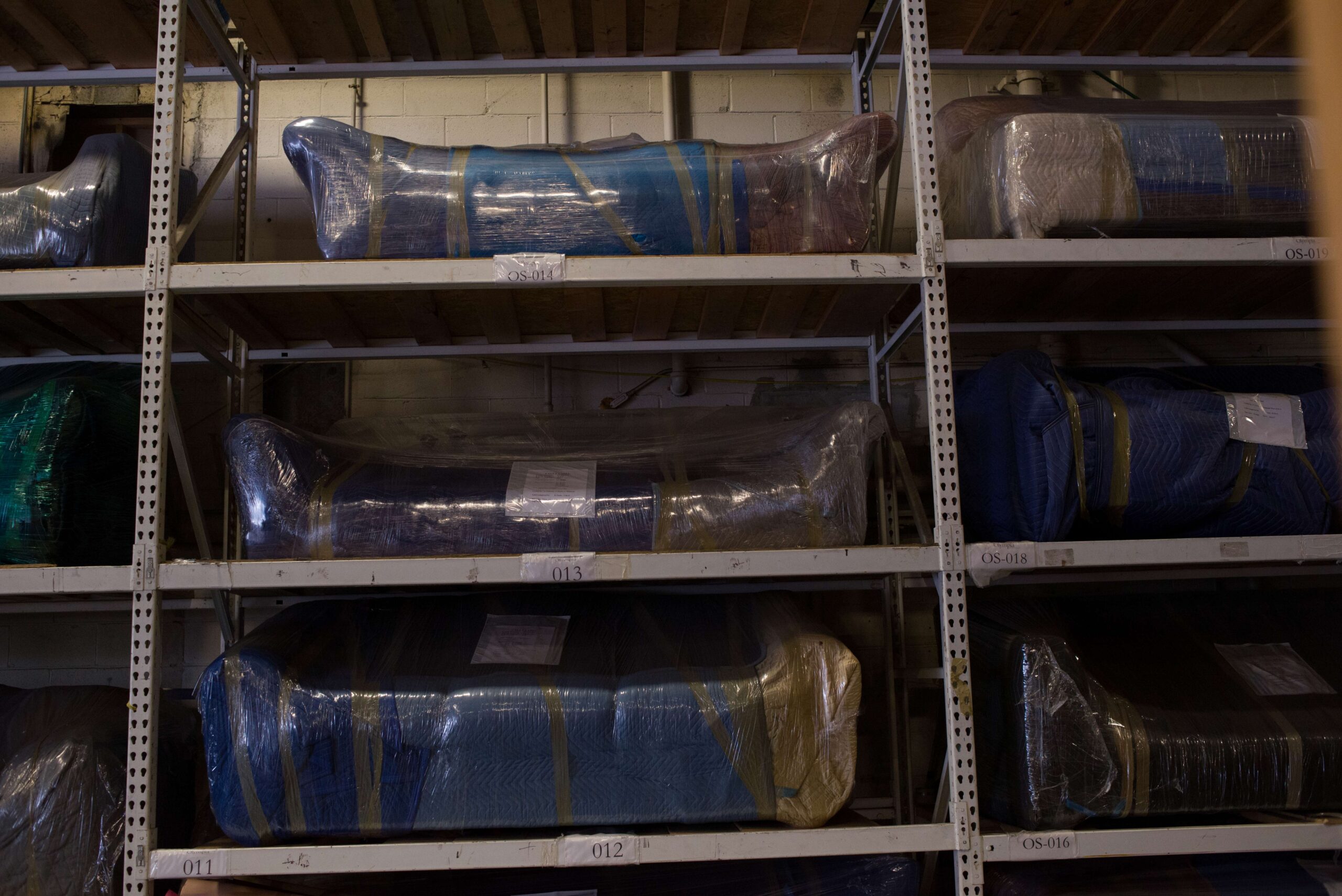
Designed for large or irregularly shaped items that don’t fit into standard vaults or pallets. This often includes tables, oversized artwork, and couches. These items are stored on open warehouse floors, or designated rack sections to allow safe handling. -
Crated
Used primarily for residential shipments, long-term storage, or high-value items requiring extra protection. Goods are wrapped, inventoried, and sealed in individual wooden vaults, keeping each customer’s belongings separate and secure. Provides the highest level of protection and traceability. -
Floor
Reserved for items that are too large, heavy, or temporary for vaulting or racking; such as pianos, large machinery, or short-term commercial deliveries. Goods are places directly on the warehouse floor in designated, labeled areas to ensure accessibility and prevent mix-ups. -
Liftvan
Used primarily for international inbound/outbound shipments, liftvans are wooden or cardboard crates built to standard export dimensions. They allow household goods to be packed, sealed, and transported seamlessly between origin, warehouse, and destination without repacking. This minimizes handling, reduces damage risk, and simplifies customs and freight coordination.
Warehouse Job Types
There are three primary job types that take place within the warehouse: Inbound shipments, Outbound shipments, and storage maintenance. Each plays a critical role in keeping inventory organized, shipments on schedule, and client goods protected. These functions work together to ensure the warehouse operates efficiently and without loss.
-
Inbound Shipments
Refers to goods arriving at the warehouse from origin agents, carriers, or clients. -
Outbound Shipments
Refers to goods leaving Olympia’s warehouse, either for delivery to a local destination or transfer to another carrier for long-distance or international moves. -
Storage Maintenance
Ongoing care of all stored goods including inventory tracking, condition checks, and organization.
Roles & Responsibilities in Warehouse & Storage Operations
| Sales | Operations | Movers/Warehouse Staff |
| Accurately identifies when short-term or long-term vaulted storage is required during the quoting process | Manages warehouse scheduling, space allocation, and inventory control. |
Handle the physical receipt, storage, and release of goods
|
| Ensures clients understand storage fees, insurance coverage, and access policies. | Ensures items are stored efficiently (vaulted, racked or floor) and properly tracked in the system |
Responsible for accurate inventory tagging, condition reporting, and proper stacking or vaulting to prevent damage.
|
| Provides clear labeling and documentation so items can be properly received and tracked in the warehouse | Oversees warehouse safety, climate control, and coordination between storage and active move schedules |
Maintain a clean, organized facility and follow security, safety, and access protocols at all times.
|
Key Paperwork:
Warehouse Contract: Outlines the terms of storage, including rates, liability coverage, access policies, and termination conditions. This contract must be signed before items are received into storage to ensure proper authorization and billing.
Updated Inventory for Access/Removal: A detailed inventory must be maintained and updated whenever items are added to, accessed from, or removed from storage. This ensures accurate tracking, prevents loss or misplacement, and provides a clear record for both the client and internal deparetments.
Billing Process
Storage billing varies depending on whether the account is residential or commercial. Each type follows a distinct structure that reflects how space, handling, and labor are utilized. Understanding how billing works helps ensure accurate estimates, transparent client communication, and proper invoicing.
-
Residential Storage
Residential storage is billed per vault or per storage location, plus a handling fee for the labor involved in placing items into or out of storage. The rate may vary depending on whether the items are vaulted, racked, or stored as oversize pieces. -
Commercial Storage
Commercial storage is billed either hourly (for labor-based handling and access) or per 100 pounds of stored weight, often called “per hundredweight” or “CWT”. This method provides a scalable way to charge larger-volume clients based on actual space and handling needs. Example: If a commercial client stores 1,000 lbs of furniture and the storage rate is $5.50 per 100 lbs, the monthly storage cost of storage is $55/month
Things to Know: Warehouse Essentials
The warehouse is the backbone of Olympia’s operations. It’s where we store supplies, build crates, and stage materials for upcoming jobs. Understanding the space, equipment, and safety expectations ensures smooth workflow and reduces risk of injury or damage.
Our warehouse is equipped with tools and machinery that support daily moving and storage operations:
- Baler: Used for compacting cardboard and packing material. Only trained personnel may operate the baler.
- Warehouse Scale: Used to verify shipment weights for storage, interstate, or international moves. Accurate weighing ensures correct billing and documentation.
- Fuel & DEF Stations: Located on-site to maintain our truck fleet (with the exception of Tampa & Austin). Only authorized personnel should refuel vehicles or dispense DEF fluid.
The warehouse also serves as a supply hub for our moving operations. Packing materials such as boxes, tape, protection kids, and other consumables are stocked here. Maintaining organization and accurate inventory helps both sales (for quoting materials) and operations (for staging equipment).
Custom wooden crates are constructed in-house to protect delicate, high-value, or irregularly sized items during transit or storage. Proper measurements and labeling are key to ensuring crates are built efficiently and safely.
Safety is a top priority in all warehouse activities:
- Forklift Operators: Must wear safety vests, gloves, helmet, and seatbelt when applicable. This ensures visibility and hand/head protection.
- Traffic Awareness: Always yield to forklifts and keep clear of operation zones.
- Protective Gear: Gloves, closed-toed shoes, and high-visibility clothing are required for anyone working near heavy machinery or crating stations.