
A Practical Moving Guide for Households With Pets
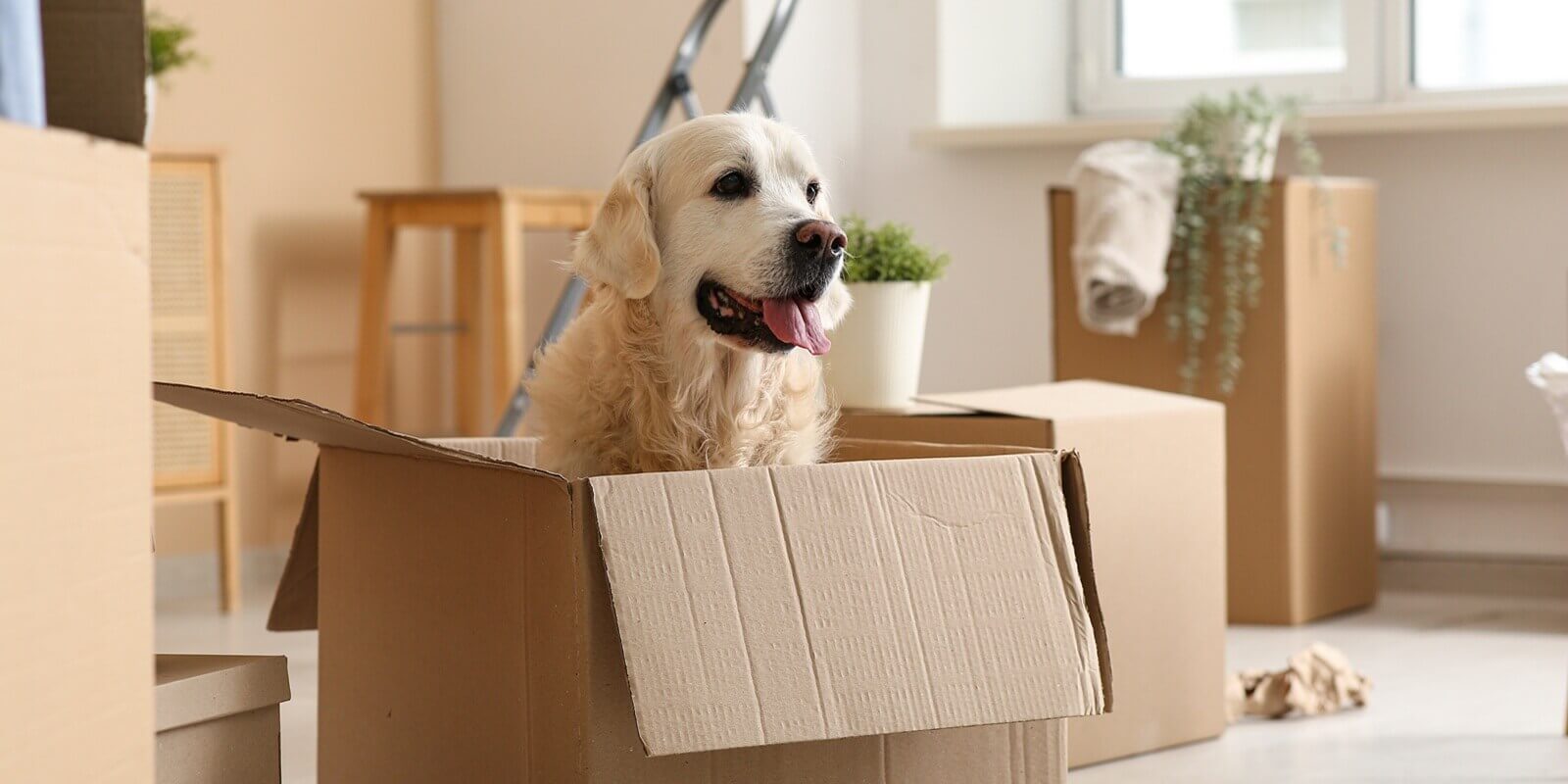
 Moving with a pet requires a plan for the animal, not just the house. The dog that hides when boxes appear and the cat that vanishes into the quietest corner of the house are both telling you the disruption started before move day did.
Moving with pets works best when the household prepares the animal in the weeks leading up, keeps them out of the chaos on move day, and holds their routine steady during the first week in the new place. A little planning up front spares your pet the worst of the disruption.
In This Article: How to protect your pet’s routine and comfort through every stage of the move.
- Prepping your pet weeks before the truck arrives
- The honest part about pet transport
- Making move day the calmest day
- Helping your pet settle into a new home
- Special cases: senior pets, anxious animals, and long hauls
- A pet-owner moving checklist
Start Prepping Your Pet Weeks Before the Truck Arrives
Boxes and moving supplies start appearing in the house weeks before move day, and your pet notices. Bringing them out gradually, a few boxes at a time spread over two to three weeks, gives your dog or cat time to treat them as part of the environment rather than a sudden disruption.
Carriers and crates deserve the same treatment. Leave them open with familiar bedding or favorite toys inside so your pet can investigate at their own pace. Anxious or senior pets often need four to six weeks of desensitization instead of two.
A veterinary appointment belongs on the moving checklist, particularly if you are moving long distance with a dog or relocating across state lines. Ask for a copy of the rabies certificate, current vaccination records, and a health certificate if the destination state requires one. Interstate health certificates are typically issued within 10 days of travel and are required for entry into many states.
While at the vet, verify that the microchip works with a quick scan and update the registered contact information to a phone number you actually answer, not an old landline. ID tags should also reflect a current cell number in case the pet becomes separated during the move. The USDA APHIS site details entry requirements for pet travel by state and internationally. Your veterinarian can also discuss travel anxiety, motion sickness, or short-term medication options well before departure.
The Honest Part Most Movers Won’t Tell You About Pet Transport
Professional movers transport household belongings, not live animals. That is a DOT regulation and a practical one. Moving truck trailers reach temperatures that can be fatal to pets, have no ventilation designed for living creatures, and can shift belongings during transit in ways that would injure any animal riding along. Your pet needs a separate travel plan.
Most families drive with their pets. Others book flights or hire a dedicated pet transport service. Making that decision early gives you time to compare options and prepare the pet.
For car travel, dogs should ride in a crash-tested harness or a secured crate strapped into the vehicle. Cats should stay inside a carrier for the entire drive. Pack food, water, medications, waste supplies, and a favorite blanket in a separate essentials bag that rides with you, not in the moving truck.
For air travel, check the airline’s pet policy carefully before booking. Many airlines restrict brachycephalic breeds (pugs, bulldogs, Persian cats) from cargo holds due to breathing risks, and most airlines have temperature embargoes that block pet transport during summer heat or winter cold. Small dogs and cats may fly in the cabin under the seat; larger animals fly in climate-controlled cargo. Compare airline pet travel requirements before booking.
Dedicated pet transport services are worth considering for long-distance moves, senior pets, or animals that cannot safely fly. Look for members of the International Pet and Animal Transportation Association (IPATA) or USDA-licensed transporters who specialize in ground and air pet moves. The ASPCA’s pet moving guidance also offers additional recommendations for preparing pets before traveling.
Make Move Day the Calmest Day, Not the Most Chaotic
Moving day brings unfamiliar people, open doors, loud noises, and constant activity. That combination is exactly what makes pets bolt through an open door.
Set your pet up in a closed room with food, water, bedding, toys, and a litter box for cats. Put a clear sign on the door (“Pet Inside, Do Not Open”) and let the moving crew know during the pre-move walkthrough where the animal is. Some owners prefer to use boarding, daycare, or a trusted friend’s house until everything has been unloaded, especially for anxious pets or short local moves where the entire day happens fast.

Have a backup plan for a worst-case scenario. Keep a current photo of your pet, the microchip number, and the local animal control phone number saved to your phone before move day starts. If your pet does slip out, the first hour matters most for a safe recovery.
Full-service packing and coordination shorten the busiest part of the move. Fewer disorganized hours mean fewer moments where the front door sits open, fewer strangers coming and going without a pattern, and a shorter window of stress for the animal. It also gives pet owners more freedom to focus on their pet rather than juggling the logistics themselves.
Help Your Pet Settle Into a Home That Smells Nothing Like Home
New surroundings feel overwhelming at first, so unpack your pet’s belongings before decorating the rest of the house. Familiar beds, food bowls, blankets, toys, and litter boxes give the new place a scent your pet recognizes.
For cats, set up a base-camp room, a spare bedroom or bathroom, with everything they need and let them settle there for the first three to seven days before opening the rest of the house. Cats introduce themselves to new spaces on their own timeline, and a base-camp approach reduces the risk of a cat hiding in a spot you cannot easily find.
Dogs generally adjust faster than cats, especially when regular walks, feeding times, and bedtime routines stay consistent. Walk the perimeter of the property or the neighborhood together during the first day so the dog can map the new area with their nose. Pheromone products designed for calming, like Feliway diffusers for cats and Adaptil collars or sprays for dogs, are worth asking your veterinarian about, especially for anxious animals.
Typical adjustment takes one to two weeks for most dogs and two to four weeks for cats, though anxious or senior pets can take longer. Reduced appetite, hiding, or clinginess during the first week is normal. Persistent lethargy, refusal to eat for more than 24 hours, or unusual behavior lasting beyond the first week is worth a call to your vet.
Special Cases: Senior Pets, Anxious Animals, and Long Hauls
Older pets and naturally anxious animals need extra preparation. A vet visit before a long move is where the specifics get worked out. Travel-anxiety medications, joint support for arthritic dogs on long drives, and adjusted feeding schedules for the trip are all worth discussing. Vets commonly prescribe Trazodone or Gabapentin for travel anxiety in dogs and Gabapentin for anxious cats, which are prescription medications that need a conversation and a written plan.
Long drives require more frequent breaks than a normal road trip. Senior dogs typically need a stop every two to three hours instead of the four to six a young dog can handle. Bring plenty of fresh water, since dehydration is common in stressed animals, and use collapsible bowls that pack down small.
For overnight travel, book pet-friendly hotels ahead of time. Many major chains welcome pets, though some charge a per-night fee and most have breed or weight restrictions. Sites that catalog pet-friendly lodging can save time on route planning.
Rest stops give dogs a chance to stretch their legs on a leash, not off. Cats stay contained in the carrier throughout the trip unless they are inside a secure, enclosed vehicle where a door cannot open unexpectedly.
Never leave any pet alone inside a parked car. According to the American Veterinary Medical Association, a vehicle’s interior temperature can increase by about 19°F in just 10 minutes, even on relatively mild days. On a 75°F day, that puts the interior above 100°F within 30 minutes.
How a Well-Run Move Protects Your Pet, Too
Moving with pets depends less on the pet and more on the household. Organization makes the biggest difference. The more compressed and coordinated the chaotic part of the move is, the less time the animal spends confused, stressed, or trying to escape it.
Full-service packing collapses what could be two or three weeks of household disruption into one or two coordinated days. That shorter chaos window is the operational reason a professionally packed move is easier on a pet than a DIY move, even before considering how the boxes get labeled or how the truck gets loaded.
A pre-move walkthrough is where the pet situation gets briefed to the crew. A briefing should include where the animal will be during the move, which doors need to stay closed, and any building-specific considerations for a high-rise apartment with a doorman or a shared elevator. Floor protection and pathway padding also keep the entryways and hallways covered so the crew is not tracking scent through every room the pet uses.
The value of that kind of coordination is that the pet spends less time in the middle of the disruption, and the household spends less time managing both a move and an anxious animal at the same time.
A Pet-Owner Moving Checklist
- Schedule a veterinary appointment and gather current records, including a health certificate if you are crossing state lines
- Update your pet’s ID tags and microchip contact details with a current phone number
- Bring out carriers, crates, and boxes two to three weeks before move day
- Arrange transportation for your pet before move day, whether by car, air, or a dedicated pet transport service
- Pack a pet essentials bag with meals, water, medication, waste supplies, and a favorite blanket
- Set up a closed room or arrange a sitter, boarding, or daycare for move day itself
- Set up your pet’s bed, bowls, toys, and litter box first in the new home
- Keep feeding, walking, and play routines consistent through the first week
Planning ahead makes moving with pets much easier for everyone in the household. A well-organized move gives your pet a calmer transition and gives you the space to focus on the animal, not the logistics.
Plan a Calmer Move for Everyone Under Your Roof

At Olympia Moving, we treat every move as a household project, and that includes the pets. Our Move360™ service handles packing, loading, transport, and unpacking with a coordinator who briefs the crew on household-specific considerations before move day. That includes where the pet will be, how doors get managed during the move, and any building-specific rules a high-rise or condo may add.
Contact Olympia Moving to schedule a walkthrough and a personalized estimate. Every walkthrough is a chance to plan a move that fits your household, your building, and the animals living in it.