
Labeling Moving Boxes: Do’s, Don’ts & Smart Strategies
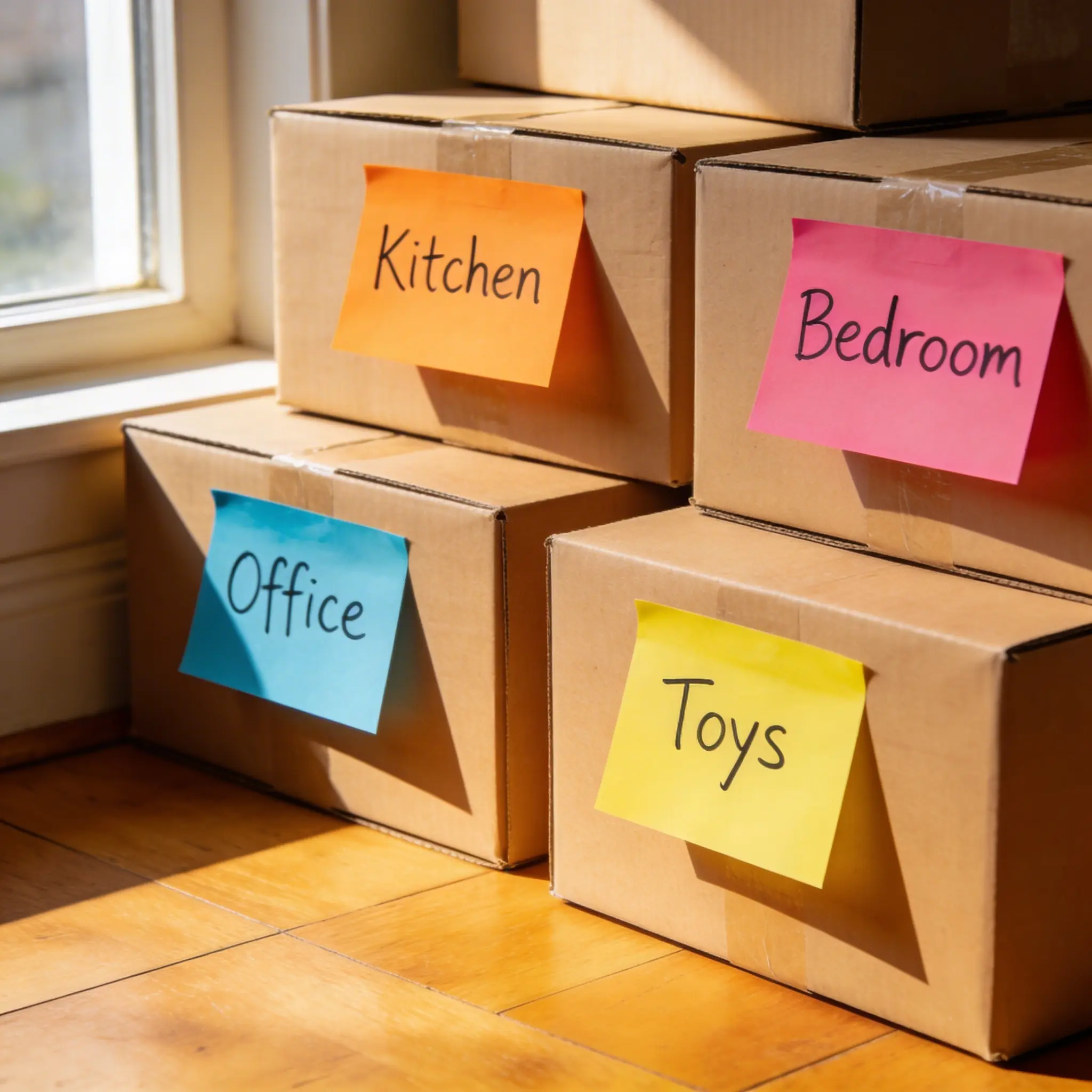
Relocating doesn’t have to mean total chaos. With the right strategy for labeling moving boxes, you can reduce stress, improve efficiency, and unpack with confidence. Rather than simply scribbling contents on a box, forward-thinking movers in 2026 are building high-functioning systems incorporating color coding, technology, and proven organization methods. In this blog, we’ll dive into the do’s and don’ts of making your move smoother, smarter, and more systematic with a labeling approach that’s all about visibility, categorization, and future-ready tech.
Many people underestimate how labeling decisions impact every facet of their move—from who handles which box to what gets unpacked first in the new home. Whether you’re moving across town or across the country, your choices now can mean the difference between a smooth transition and a frustrating, drawn-out unpacking process. Thankfully, you don’t need to reinvent the wheel; you just need to follow some proven methods and smart 2026 tools to make your move seamless.
Why Effective Box Labeling Matters
Moving involves hundreds of micro-decisions and logistical tasks. Misplaced essentials, broken fragile items, and unlabeled boxes can throw your timeline (and cortisol levels) off track. That’s why creating and following a deliberate box labeling system is no longer optional—it’s essential. Proper labeling helps you:
- Avoid misplacing critical belongings like chargers, toiletries, and paperwork.
- Ensure fragile items are handled with proper care.
- Simplify unpacking by identifying contents and room destinations at a glance.
- Save money and time by reducing duplicate purchases and lost items.
- Enable others to assist if you’re delegating—movers and family members can read clear labels instead of guessing.
- Provide instant access to key items, especially if you arrive at your new home before fully settling in.
Also, labeling isn’t just about function—it impacts safety. Properly labeled boxes with weight indicators and caution notations can help avoid injuries when lifting or stacking. This matters especially when hiring professional movers or enlisting friends.
Do: Build a Labeling System, Not Just a Label
Here’s the golden rule: don’t treat labeling like an afterthought. Treat it like a system. A consistent, logic-driven structure for marking, categorizing, and locating boxes can transform your entire moving experience.
Use the Rule of Three for Visibility
One of the most overlooked efficiency hacks in moving is the Rule of Three: always label the top and at least two adjacent sides of every box. Why? Because when boxes are stacked, you often can’t see the top or certain sides. By labeling three sides, you ensure at least one label remains visible no matter how the box is positioned.
To take this even further, consider using waterproof markers or laminated labels, especially for items that might be temporarily stored in garages or other non-climate-controlled areas. Harsh weather, humidity, or even condensation from cold floors can distort or smear basic labels, making them hard to read when you need them most.
Leverage a Color-Coded Moving System
Using a color-coded moving system assigns each room or category a unique color. For example, all kitchen boxes get green labels, while bedroom items get blue. This method offers immediate visual clarity to movers and makes sorting boxes into rooms effortless. You can implement this using colored tape, stickers, or printable colored labels.
To boost organization, keep a master color reference chart taped near entrances or posted inside the moving truck. This ensures everyone helping unload boxes knows exactly where each box belongs without having to ask or second-guess. Bonus tip: use dual coding—colors for rooms and icons or symbols (e.g., a fork-and-knife graphic for the kitchen) to accommodate visual learners or multi-language households.
Harness Technology: QR Code Moving Labels
Welcome to the future of moving: QR code moving labels. These smart labels link to detailed digital inventories. Apps like Sortly and Scanlily allow you to scan a QR code and “see” inside the box without opening it. Capture photos, list contents, add tags, set fragility warnings—all stored in a secure cloud environment. This is especially useful for long-term storage or cross-country moves where rapid identification matters.
Make sure to print QR codes at full size and tape them securely to multiple sides of the box, just like traditional labels. Test-scan them before move day to ensure readability. Some apps even allow password protection on box contents—ideal if your boxes contain sensitive items during a shared move.
Don’t Forget Your Box Inventory App
A box inventory app doesn’t just help with packing—it gives you long-term tracking over your belongings. High-rated apps in 2026 include Sortly, Moving Organizer, and Scanlily. These apps sync with your QR code labels and include search functionality, so you can find your blender or Fire Stick charger in seconds, even weeks after moving.
You can also use these apps to keep documentation of valuable items for insurance purposes during transit. Simply photograph items as you pack, and attach notes or receipts within the app’s inventory interface. If you ever need to file a claim, it’s all easily accessible.
Practical Box Labeling Tips for Maximum Efficiency
- Step 1: Plan before you pack. Don’t just start throwing things into boxes. Create a room-by-room packing list and assign a color and label ID to each room. Think about box count estimates per room to help you gather enough supplies.
- Step 2: Pre-print your labels. Use moving box labels printable templates for consistency. You can find customizable versions online that support color coding and QR generation. Print extras for last-minute packing items.
- Step 3: Label after sealing boxes. Writing before sealing leads to inaccuracy. Sometimes, items initially packed get rearranged. Wait until the box is sealed to write the final content list. Also, note box weight estimates if possible.
- Step 4: Always include fragility information. Use bold, contrasting wording or stickers for fragile item marking. Clearly label boxes with “FRAGILE – HANDLE WITH CARE” in red or place a universal icon sticker. Consider using double arrows to indicate upright orientation.
- Step 5: Label multiple sides. Remember the Rule of Three. Always label the top and two visible sides for accessibility during stacking and transportation. Visibility reduces opening boxes unnecessarily.
- Step 6: Highlight the essentials. Create a separate moving essentials box and label it accordingly—e.g., “OPEN FIRST: Chargers, Medicine, Paper Towels”—so it’s accessible immediately upon arrival. Include the essentials list on the label itself.
- Step 7: Use numbered labels for high-volume moves. Assign each box a number, and keep a digital or printed manifest. This helps track box totals and ensures nothing is missing on the other end of the move.
Don’ts That Waste Time and Cause Chaos
- DON’T write “Miscellaneous.” The worst offender. Labeling a box “Misc” is a sure way to lose track of what’s inside. Be specific—use categories, item types, or room designations.
- DON’T use low-contrast labels. Poor visibility means wasted time and confusion. Avoid markers or labels with low contrast (like light blue on white). Instead, use bold lettering with black permanent markers or pre-printed black-on-white labels for clarity.
- DON’T label early. Labeling boxes before they are fully packed—and sealed—often leads to misleading or incomplete information. Labels should reflect final contents, not preliminary plans.
- DON’T forget direction and orientation. Arrows indicating which side is up and clear signs for fragile contents prevent mishandling.
- DON’T skip waterproofing. If your boxes will be in a truck overnight or left outside, laminate your labels or cover them with clear packing tape to protect against rain or spills.
- DON’T forget to communicate your label system. Make sure any helpers or hired movers understand your labeling system. A quick laminated guide or walkthrough goes a long way.
Advanced Techniques for 2026
Smart Labeling with IoT Integration
Some advanced households and moving services are integrating smart sensors inside moving boxes, especially for electronics or collectibles. These sensors monitor temperature and movement during a move and send updates or alerts if something goes wrong.
For example, IoT-enabled tags can monitor humidity levels for a guitar collection or shock impact for a flat-screen TV. If damage risk exceeds limits, the system sends a text alert, allowing you to act quickly before further harm occurs. Services like MoveSmart and IoTrack are beginning to offer subscription sensor tracking as part of premium relocation packages.
AI and Inventory Forecasting
Apps now offer AI-driven suggestions for packing and inventory management. Based on your scanned items and previous inputs, they can recommend optimal box sizes, predict unpacking difficulty, and even generate instruction sets for reassembling furniture. This frontier feature saves hours.
Some AI systems evaluate your packing habits and offer real-time tips such as consolidating duplicate tools in separate boxes or preventing overloading small boxes with heavy books. The efficiency gains can be significant, streamlining unpacking and improving safety.
Conclusion
Labeling moving boxes correctly is more than just scribbling with a Sharpie—it’s about developing a proactive system that supports your move from packing to unpacking. Use the Rule of Three, a smart color-coded moving system, modern QR code moving labels, and a reliable box inventory app to bring your moving strategy into 2026. Avoid poor practices like premature labeling or vague labels, and don’t underestimate the power of visibility and technology. With the right approach, your move can be faster, smoother, and far less stressful.
So, the next time you’re facing a stack of moving boxes, remember: the difference between chaos and calm lies in how you label.